
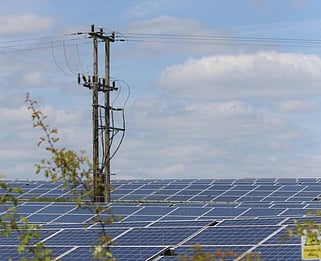
As energy prices continue to fluctuate, more homeowners are looking for ways to maximise the value of their solar panels and battery storage systems. E.ON Next Optimise is a new type of domestic electricity tariff designed specifically for households with solar PV and battery storage, combining dynamic half hourly pricing with AI-powered automation to help customers reduce costs and increase export earnings.
What is E.ON Next Optimise?
E.ON Next Optimise is a smart import and export tariff that tracks wholesale electricity prices throughout the day. Unlike traditional fixed-rate tariffs, the price you pay for electricity imported from the grid and the amount you earn for exported electricity changes based on market conditions.
The standout feature is E.ON's smart optimisation technology, which automatically controls your battery system. Using AI and machine learning, the platform charges your battery when electricity prices are low and either uses or exports that stored energy when prices are higher.
In simple terms, the system aims to buy electricity cheaply and sell it back at more valuable times, helping homeowners get the most from their renewable energy investment.
Haven’t we seen this before?
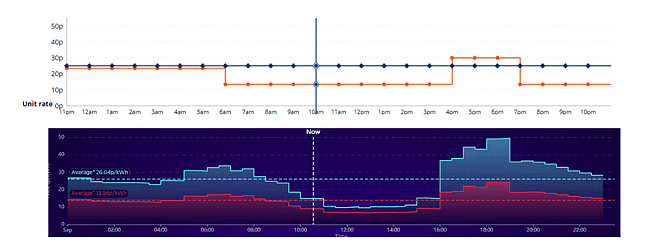
Interestingly, yes we’ve seen similar to this pop up in a few places. The most obvious is Intelligent Octopus Flux which controlled battery storage with a 3-rate Time of Use tariff. The nearest in terms of dynamic pricing is Octopus Agile which is an import and export tariff, these both follow day-ahead wholesale pricing.
Smart control isn’t just tied to home batteries either, there are a whole host of EV tariffs which control the charging of vehicles as off-peak pricing. But Optimise could potentially combine PV Generation, battery and EV assets in one, with wholesale linked pricing.
How Does It Work?
The tariff follows a simple daily pattern:
Overnight
We traditionally assume that wholesale electricity prices are typically at their lowest during the night. During the summer months, this is no longer the case and early afternoon pricing tends to be cheaper.
Therefore, the system only tops up your battery from the grid if it needs to. It will only do this if required, for instance if the sun is likely to be plentiful the next day and prices are lower, it will just get you through the night.
During the Day
The morning peak usually sees solar generation being sent to support the grid, balancing just enough for the home.
From mid-morning solar generation and lower-cost electricity can be used to charge your battery further, ensuring energy is available when demand increases. A clever part of the tariff is that it will export energy when the prices are high, either by pausing battery charging or forcing discharge.
Evening Peak
Instead of importing expensive electricity from the grid, your home can use stored battery energy. Excess electricity can also be exported back to the grid when export prices are more attractive. The system will also continue to export throughout the evening if prices remain high, reserving just enough to get you through to the morning again.
Potential Savings
One of the biggest attractions of Next Optimise is the potential for increased savings compared to conventional solar export arrangements.
According to E.ON Next, homes involved in the pilot phase achieved average savings of approximately £18 per month, with modelling suggesting some households could save close to £300 per year. Some participants reportedly saved significantly more during periods of high wholesale market volatility.
Of course, actual savings will depend on factors such as:
Battery capacity
Solar generation levels
Household electricity consumption
Local weather conditions & any shading
Wholesale market prices
Households with larger battery systems and flexible energy usage are likely to benefit the most. Although owners of smaller battery system can join, the benefits of being able to store enough energy at cheaper rates are more difficult. You might find more battery cycling or you export excess PV generation at less than optimal pricing.
Early Adopter Benefits
When E.ON launched the tariff, it offered early customers an additional incentive:
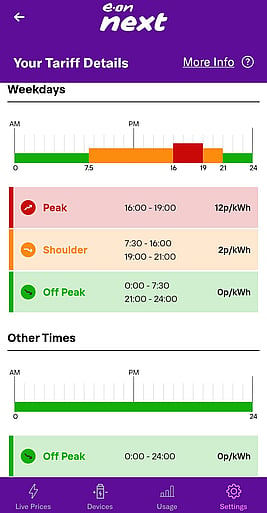
3p/kWh cheaper electricity imports between midnight and 6am.
An extra 3p/kWh for exports between 4pm and 7pm.
These early-bird benefits were designed to reward the first customers helping E.ON refine the service during its rollout.
Who Is Eligible?
Next Optimise is aimed at homeowners who already have:
A working smart meter sending half-hourly readings
Solar panels
A compatible battery storage system
E.ON currently supports a range of battery manufacturers, including:
Tesla Powerwall 2 and 3
GivEnergy systems
Fox ESS compatible models
Alpha inverters
Sigenergy systems with a Sigen Gateway or Sensor
Additional manufacturers are expected to be added over time.
What I actually found
1. Automated Energy Management
Although you don't need to manually monitor electricity prices or manage battery charging schedules, changes in your routine will affect this. We have 2 EV’s, neither of which are compatible with the SmartShift system – note this is different to the Kraken platform used by E.on. This is meant to charge them at cheaper rates, you did need to check the pricing quite carefully, it was very difficult to get more than 4-5 hours of charge periods in one day.
The automation also struggled with calculating intermittent but constant loads. During the really hot weather, we ran our portable air conditioning, a load of around 1.6kw. The machine learning really struggled with this, I found that it was not taking this load into account in the battery management or overnight reserve. Why this happens I’m not sure, but you can override the automation and force charge & discharge of your battery – the only thing that never worked was pausing it. I suspect that is down to my equipment having a pause function but not a timed pause.
I found that the automation did make use of exporting at good rates, there was really only a couple of times when I thought I would do things a bit differently myself. Things don’t work well if your inverter (or battery) cannot see the whole house load, for instance if you have split load boards and the CT clamps only cover one side. This ‘missing’ data won’t be seen by Optimise and therefore excluded from the calculations.
2. Better Returns from Solar
Optimise uses SmartShift technology, which in Australia is designed to reduce solar generation exports in the daytime and store this instead. It’s well known that in some parts of the world, solar is producing excess energy to a point that it risks overloading the grid. In some cases this has meant pricing export in such a way that it penalises home owners, in other words paying to export. We’re not at that point yet in the UK, but we’ve seen flat rate export tariffs reduce returns and dynamic ones start to enter the market.
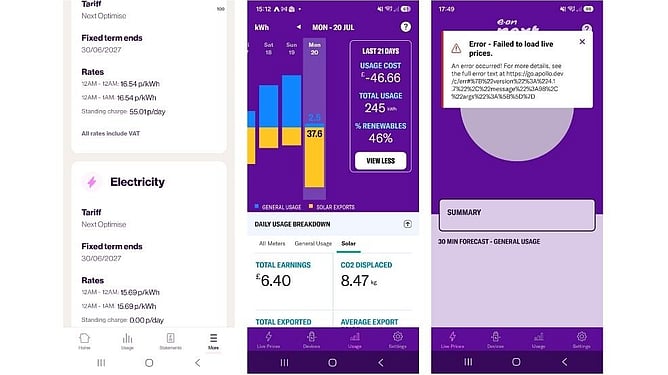
So, with Optimise rather than exporting electricity at a flat rate, you can potentially benefit from higher export values during periods of peak demand. In August my average export price was almost 21p/kWh, that’s a good price for the time of year.
But there is a warning here, I also used around 200kWh of my own generation to charge the EV’s. That’s good for the environment but planning this was pretty difficult, on some days we had to do this to prevent a negative export price – paying to give our generation to the grid. This did mean keeping a vehicle ‘available’ to soak up the power at fairly short notice.
During the time on Optimise we rarely charged from the grid, the automation had a few short bursts to then sell later on but generally the batteries filled from the PV. I suspect this would be different in the darker months but I’m not going to wait that long to find out. There were occasions when the export price almost hit 40p/kWh, but only once or twice in two months. These are great rates, but they also occur when you’re likely to be using quite a bit of power yourself.
Optimise is a ‘net energy’ tariff, vastly similar to what is called Net Metering in other countries. This could be because VAT is charged on electricity supply to domestic premises, but the domestic customer is not registered, or required to be registered, for VAT, no VAT would be chargeable on the export payment. The domestic customer would simply receive the export tariff payment without adding VAT.
If it was that Optimise ‘netted off’ the export against the import, this would also reduce the VAT due on it. But, as current tax rules allow, VAT is charged on use of electricity at the time not as a cumulative value – but could this be challenged? A question for another time.
3. Greater Visibility? Not really.
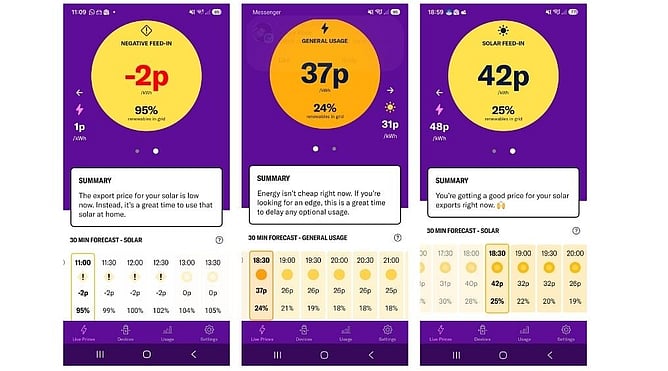
E.on state that the accompanying app provides detailed monitoring and real-time insights into household energy performance. I would agree with this to a certain point but we some big caveats, one being that your can only see pricing 12 hours ahead of now.
There is no documentation on which wholesale market pricing is based on, and unlike Octopus Agile, the price can (and does!) change right up to the minute before the next half hour segment. To help estimate pricing, I use the Nord Pool day-ahead price which gave a ball park guess of high or low pricing, Optimise did follow the general pattern of this pricing. Where it did seem to really change is from the intra-day pricing and balancing costs, these are more difficult to predict and there is no documented evidence of how pricing is linked to this. But it was often clear that pricing was being based on availability of generation & demand.
A good example is on one Saturday, checking prices at 7am found import rates at around 17p kWh for most of the day, a bit higher than I had expected based on the above. However by 10am prices had dropped substantially, 3p kWh import at some points with 0p for export. Great for charging the car, but hopeless to plan for!
Unlike the Australian version of the system there is no API to use. I did try some work around automations with Home Assistant but they weren’t successful really. If there was an API like Octopus Agile, you could automate EV charging linked to pricing or excess solar availability. This seems a really big miss for Optimise, it keeps battery control simple but not good for techies. It also means that you can’t directly control other items such as electric heating or heat pumps from Home Assistant or any other API aggregation.
4. No Exit Fees, but you can’t go back either.
Customers can leave the tariff if it doesn't suit their circumstances, but you can’t revert to your previous tariff. Any change can only be to the current set of tariffs that E.on offer, which as a beta tariff with very little actual information is pretty poor. You are supplied with a ‘quote’ for the tariff, which really doesn’t match the way use might change with dynamic pricing.
You will also need to leave any Demand Flexibility Services you may be connected to, for example Axel Energy VPP. There’s doesn’t seem to be any obvious back checking on this, but I hadn’t taken part in any of Axel’s events whilst on Optimise. You would also drop out of the E.on Power Up/Down sessions too, although the dynamic pricing would easily cover those schemes.
Potential Drawbacks
While the tariff offers significant opportunities, it won't be suitable for everyone.
Wholesale Price Exposure
Because prices are linked to wholesale markets, customers may experience greater volatility than with traditional fixed-rate tariffs. Unlike Octopus Agile, there is no upper rate stop so in theory that price per kWh could get eyewatering, but that would equally mean the return of export could be big too.
There's also a big negative - that's the export risk. On very sunny days, or any day when import prices are cheap, you can be charged for exporting. This is common in climates like Australia and California, but not for domestic generation in the UK. It's one to watch on this tariff very closely.
It’s a set and leave control system, but not set and forget. You will need to keep an eye on pricing if you’re wanting to charge cars, or use more electricity than you can store or output via your inverter.
Requires Battery Storage
Homeowners with solar panels alone cannot take advantage of the tariff. A compatible battery system is essential, and the bigger the better. I have 19kWh of storage capacity, I often found large chunks of space in the battery were needed for really low export price times. On some sunny days, you’d find 6 hours or more of low or negative pricing was common.
There are long periods of export too, this does make me wonder the effect this cycle of full power import & export has on battery life.
Technology Dependence
The savings rely on automated optimisation software making effective charging and exporting decisions. While designed to maximise value, actual performance will vary from property to property. You’ll also need a smartphone so the Optimise App can be used, it isn’t possible to view any of the data via a web browser. Oddly enough, you’ll still need to access your standard account to see your bill – this isn’t shown in the Optimise App.
Forget the home display that came with your smart meter, it won’t show the correct rates for your electricity, I did find that the gas rate was correct though. But it’s handy to keep around as you can see the amount of power being imported and exported at the time.
The equipment at your address will also need to be internet connected so Optimise can send instructions to it. Therefore it needs reasonable good signal strength or be hard wired to your router. Although missed commands are resent, data from the system such as solar output needs to be regularly sent to Optimise. For billing purposes, Optimise uses the data from your smart meter anyway, this does find its way into the App within a day or two. What isn’t clear is how any gaps in smart meter data might be made up should the half hourly reading be lost – I can only assume some sort of averaging.
Final Thoughts
E.ON Next Optimise represents a glimpse into the future of domestic energy. Rather than simply consuming electricity, households can actively participate in the energy market, using smart technology to buy, store and sell electricity at the most advantageous times.
It needs some work though, especially some interoperability with more kit such as EV’s or Heat Pumps. Even an API would help bridge that gap, but E.on have been surprisingly silent about customer access to any APIs – even though the do exist on a developer platform.
For homeowners who already have solar panels and battery storage, the tariff offers an innovative way to potentially increase savings and improve returns on their renewable energy investment. Whilst it may not suit every household, it is one of the most advanced smart energy products currently available in the UK market.
As energy systems become increasingly intelligent and decentralised, tariffs like E.ON Next Optimise, Octopus Agile, EDF Free Phase could all become the standard model for how homes generate, store and manage electricity in the years ahead.
Did I save or make money on this tariff?
This question entirely depends on which tariff you are comparing it against. My first reason for fitting Solar PV was to reduce reliance on carbon heavy generation, with a view to also being energy independent.
Apart from a bit of time, we didn't lose anything from trying this and I glad I did. Whilst I'm waiting for my final bill, early indications suggest that pricing was vastly similar to my old tariff - a fixed export & 2 rate import. But this pricing is at the expense of more importing & exporting by the equipment - could this more costly in the long run?
Pricing is just one part of the story though, as not everything could be automated it meant much more intervention that I wanted. Charging of the cars was becoming a chore, as did the issue of unexpected constant loads. I would much rather manage an element of this myself or at least be able to tell the system what is happening.
I did find that I used much more of the solar generation myself, this was a byproduct of the very low export pricing rather than intentional. By plugging in the electric vehicles just to soak up the excess did work, but this means having a car at home all the time.
Why didn't I stay on the tariff?
The main reason - EV charging, it's too much of a pain to manage without some sort of automation.
Then it's certainty of pricing, and with this tariff it is a little more opaque than similar tariffs from other suppliers. The 12-hour view is just about manageable, but the real uncertainty of pricing up to the minute before was too much. Our business uses day-ahead pricing, so I'm quite used to the ups & downs of the wholesale market. But intra-day? We need more clarity on this!